Platform

CDM

A standardised digital framework for seamless financial interoperability.

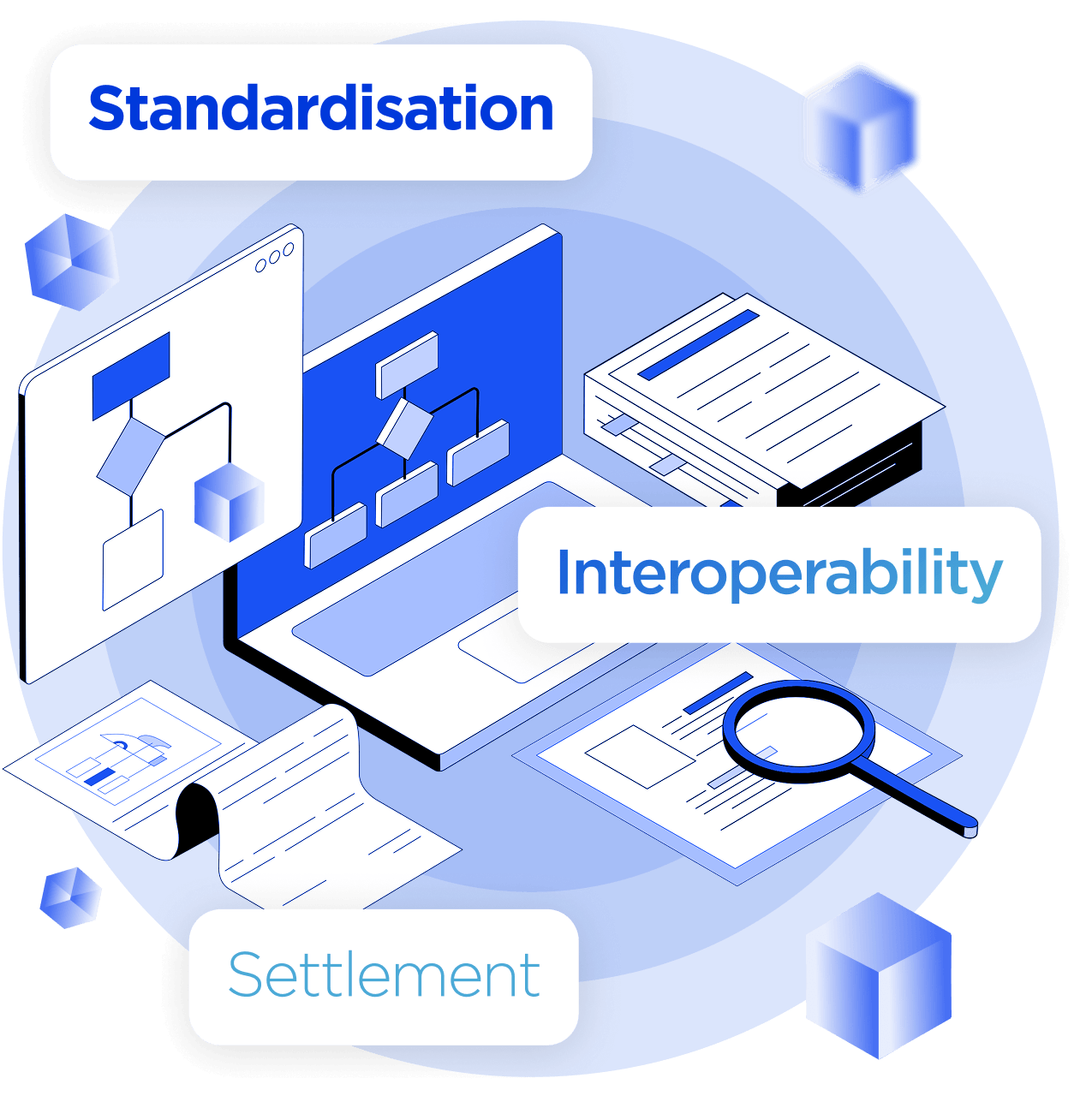
The FINOS Common Domain Model (CDM), a Linux Foundation project originally developed by ISDA, ICMA and ISLA, provides a standardised digital representation of financial products, lifecycle events, and processes, ensuring that all market participants describe and process trades in the same way. It defines how events such as execution, allocation, and settlement are structured and recorded, creating a shared semantic layer that reduces ambiguity and supports interoperability across systems.

Streamlining post-trade workflows with standardised logic

Tokenovate uses CDM as the foundation for its workflow service, embedding these standardised event definitions directly into its programmable settlement logic.


Each trade progresses through clearly defined state transitions that align with CDM lifecycle events, ensuring that all participants reference the same data and outcomes at every stage. This allows Tokenovate to synchronise trade state across custodians, asset managers, and market infrastructures, while its discrete state model ensures that each transition is deterministic, auditable, and final.


Result

  • The result is a permissioned, interoperable environment that supports accelerated settlement cycles with greater certainty and reduced operational friction.

FAQs

The CDM is a standardised digital blueprint for financial products and their lifecycles, originally created by major industry bodies (ISDA, ICMA, and ISLA). It is used to provide a shared semantic layer, ensuring that all market participants—regardless of their internal systems—describe, record, and process trades using the exact same definitions and structures.

Tokenovate uses the CDM as the primary foundation for its programmable settlement logic. Rather than creating proprietary definitions, Tokenovate embeds standardised CDM event definitions (such as execution, allocation, and settlement) directly into its services. This ensures that every trade progresses through state transitions that are globally recognised and deterministic.

Implementing this model creates a highly synchronised and permissioned environment where trade states are consistent across all market infrastructures. Because the state transitions are discrete and deterministic, the system provides a final and auditable record of every event, which ultimately supports faster settlement cycles, increased certainty, and a significant reduction in operational friction.

CONTACT

Book a Meeting

Want to learn more about post-trade automation?
Book a meeting with our team today!

Areas of Interest

How it works

Modernise Your Post Trade Operations with Tokenovate Today

Learn More