



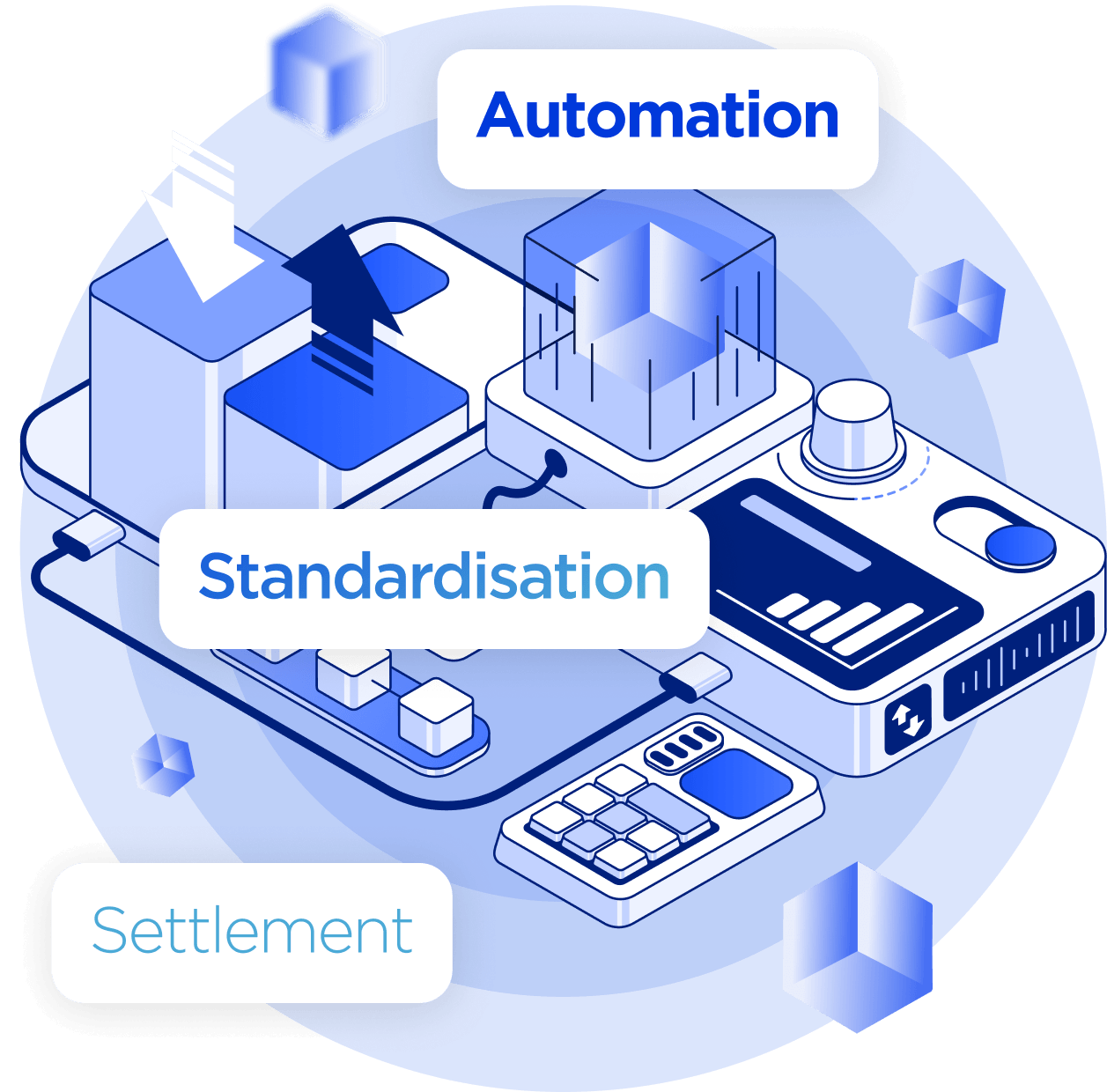
The Unified Trade Record (UTR) creates a single, trusted view of the trade using CDM. The workflows then use this data to process lifecycle events and generate validated obligations. These are passed to the settlement layer, where the Novat protocol completes transactions using discrete, single-use state objects that ensure accuracy and full traceability.
This keeps trade data, lifecycle processing, and settlement aligned across all systems and participants.
Benefits
- Tokenovate delivers a single, trusted view of each trade, enabling consistent and automated lifecycle processing across institutions and systems.
- By standardising workflows and aligning all participants to a shared representation of events and obligations, it removes manual reconciliation, reduces operational risk, and improves data quality and transparency.
- Programmable settlement ensures that obligations complete with certainty at the point of legal finality, supporting faster settlement cycles, such as T+1 and beyond, lowering failure rates, and enabling more efficient use of capital and liquidity across asset classes.